Search Results for: prisoner voting/page/11/ministers have been procrastinating on the issue, fearing that it will prove unpopular with the electorate./page/70/[2001] EWCA Civ 1546
27 October 2011 by hrupdateadmin
 In his speech earlier this week the Attorney General announced that he would appear in person before the Grand Chamber of the European Court of Human Rights in two weeks’ time, when it hears Scoppola v Italy No2, a case concerning prisoner voting. The United Kingdom is due to intervene in this case, for reasons that readers of this blog will be fully aware of.
I agree with Adam Wagner’s comments that the Attorney General’s speech should (if I may respectfully say so) be applauded for the mature and positive way it addressed some very important issues regarding the future protection of human rights at both the domestic and European level. Here I would like to focus in particular upon what Dominic Grieve said about prisoner voting, and his forthcoming appearance at Strasbourg. On page 9 of his speech he stated:
Continue reading →
Like this:
Like Loading...
9 October 2015 by Fraser Simpson

Image: Guardian
Delvigne (Judgment), [2015] EUECJ C-650/13 – read judgment.
In a judgment much anticipated on both sides of the Channel, the Court of Justice of the European Union (“CJEU”) has held that French restrictions on the eligibility of prisoners to vote are lawful under EU law.
by Fraser Simpson
Continue reading →
Like this:
Like Loading...
15 July 2010 by Matthew Hill
 R (Humberstone) v Legal Services Commission [2010] EWHC 760 (Admin) – Read case
Part 2 of Matthew Hill’s feature on the duty to investigate deaths under human rights law (read Part I).
A recent High Court decision (see previous post) concerning the funding of a party at a coroner’s inquest has highlighted the importance of distinguishing between the two different types of investigative duty that arise under Article 2 ECHR.
It is argued in this post that imprecise terminology and a failure to appreciate that Article 2 is engaged in Jamieson as well as Middleton inquests has confused this area, and that the learned judge in R (Humberstone) v Legal Services Commission [2010] EWHC 760 (Admin) erred by eliding the investigative duties and the case-law from which they emerged.
Continue reading →
Like this:
Like Loading...
9 June 2020 by Jake Richards
The Government’s announcement that eleven local authorities across England would be taking part in voter ID pilots for the 2019 local elections was controversial. There is a heated debate as to whether citizens should have to provide photo identification before receiving their ballot at elections. For some, it is a straight-forward measure to avoid the risk of fraud. For others, it is a policy that, by design or inadvertently, leads to the disenfranchisement of certain groups.
This debate was not considered by the courts in the challenge to the legality of the pilot schemes brought by Mr Neil Coughlan, a former district councillor from Witham Essex. But the consequences of the decision of the Court of Appeal in R (Coughlan) v Minister for the Cabinet Office [2020] EWCA Civ 723 could be profound for our electoral law.
Continue reading →Like this:
Like Loading...
20 October 2013 by Guest Contributor
 At first glance, prisoner voting proponents may interpret the Supreme Court’s R (Chester) v Justice Secretary decision (see Adam Wagner’s previous post) as a defeat for advancing prisoner voting rights in the UK. This blog post offers a different perspective. By comparing Chester to the seminal US Supreme Court case of Marbury v. Madison, we summarise that such proponents should take a step back and see the wood, rather than merely the trees. This is because Lord Mance’s Chester judgment offers human rights advocates, and therefore supporters of prisoner voting rights, an unequivocal foundation from which to defend future human rights claims.
Chester does not achieve the same ends as Marbury. Marbury established the institution of judicial review in the United States, against Congressional legislation. Chester does not disturb the supremacy of the UK Parliament. Comparison arises within the strategies of the leading judgments in each case. Chief Justice Marshall’s judgment in Marbury is celebrated not only for its conclusion, that the Constitution of the United States is the highest form of law and therefore “it is emphatically the province and duty of the judicial department to say what the law is”, but also for how it reached that conclusion.
Continue reading →
Like this:
Like Loading...
7 May 2010 by Adam Wagner
 See a more recent post on this topic here
One of the enduring images of the 2010 General Election will be of long queues of people turned away from polling stations due to lack of facilities. This may well result in legal action. But according to Lord Pannick, the worse scandal may be the exclusion of 85,000 prisoners, which he says is “a constitutional disgrace that undermines the legitimacy of the democratic process”.
The BBC reports this morning that hundreds of voters were turned away from polling stations throughout the UK. This was initially blamed on a higher than expected turnout. The Electoral Commission has promised a “thorough review“, but legal action may follow from the individuals, who have been denied their basic rights, but also from the parties who may argue that marginal results would have been different if people hadn’t been turned away. In the likely outcome of a hung parliament, every seat counts and litigation may therefore follow (Update – Afua Hirch in The Guardian: Legal challenge to polling stations could result in byelections; meanwhile, Liberty, the human rights organisation, says that it will investigate the issue on behalf of voters.)
Those who have been disenfranchised may be entitled to claim under the Human Rights Act 1998. Article 1, Protocol 3 of the European Convention provides:
“The High Contracting Parties shall hold free elections at reasonable intervals by secret ballot, under conditions which will ensure the free expression of the opinion of the people in the choice of the legislature.”
This Article imposes obligations on States, and the provision includes the right to vote. Voters should be able to claim for damages under section 8 of the Human Rights Act if they can prove that they were denied a vote due to administrative incompetence, which appears to have been the case in some places. Whilst high turnout may have been a factor, voters will argue that high turnout has been predicted for a while, and should have been planned for. Similar claims were made in respect of the controversial 2000 presidential election in the United States, which was ultimately decided by the US Supreme Court, but resulted in months of paralysis.
85,000 claims?
Whilst a few hundred appear to have been affected by administrative incompetence, Lord Pannick, barrister and cross-bench peer, argues that the absolute ban on prisoners voting runs contrary to repeated decisions of the European Court of Human Rights. We have posted recently on the tens of thousands of potential compensation claims that may result, which Lord Pannick estimates will be worth at least £750 each. Similar claims may be available to those who were denied the vote for other reasons.
Lord Pannick is scathing of the Government’s failure to implement the European decisions. He says:
Continue reading →
Like this:
Like Loading...
19 February 2011 by Rosalind English
 Tovey & Ors v Ministry of Justice [2011] EWHC 271 (QB) (18 February 2011) – read judgment.
In a case heard the day before Parliament debated whether it should amend the law preventing prisoners from voting, the High Court struck out a claim for compensation by a prisoner in respect of his disenfranchisement.
Although it was “not part of the court’s function to express any view as to the nature of legislative change”, this ruling confirmed that as a matter of English law, including the Human Rights Act 1998, a prisoner will not succeed before a court in England and Wales in any claim for damages or a declaration based on his disenfranchisement while serving his sentence.
Continue reading →
Like this:
Like Loading...
27 February 2018 by Jonathan Metzer
 One way for an immigrant to gain the right to be in the UK is by making an application under the Immigration Rules. But these applications are relatively expensive and the requirements have become increasingly stringent (e.g. in a case of a partner, the normal minimum income requirement of £18,600 p/a, which was upheld by the Supreme Court).
For as long as the UK remains in the EU, there is also an alternative option – an application under the Immigration (European Economic Area) Regulations. This offers a route for the family of an EU citizen to apply for a UK residence card.
But the law in this area concerning the right of appeal has been on the move. This article will aim to give an update of where we are up to and what is still yet to be decided.
UPDATED following the Advocate General’s opinion in Banger – see end of this post.
Continue reading →
Like this:
Like Loading...
20 September 2011 by Adam Wagner
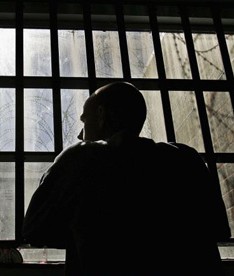 I posted recently on the ongoing saga surrounding the UK’s implementation of the Hirst No. 2 case, in which the European Court of Human Rights found that the UK’s blanket ban on prisoners voting was a breach of the European Convention on Human Rights. The correspondence between the court and the UK Government is now available and I have reproduced it below.
In short, the UK previously had until 11 October 2011 to “introduce legislative proposals” to end the ban. But it has now been given a reprieve as a result of seeking to intervene in another case, Scoppola v Italy (No. 3) (available in French, English press release here), which is going to the court’s Grand Chamber This is another prisoner voting case.
Continue reading →
Like this:
Like Loading...
24 January 2017 by Dominic Ruck Keene

Sir Edward Coke’s bold assertion in 1605 of one of the cornerstones of the unwritten constitution of the United Kingdom has been upheld today in a hugely important decision by the Supreme Court. In R(Miller) v Secretary of the State for Exiting the European Union [2017] UKSC 5, the Supreme Court today ruled 8-3 that an Act of Parliament was required to authorise ministers to give Notice of the decision of the UK to withdraw from the European Union. This post focuses on the decisions made in relation to the more legally significant claim that this Article 50 notice could not be given without Parliamentary approval, rather than those made in relation to the devolution claims – although in terms of practical political impact, a ruling that the devolved assemblies had to approve the giving of notice would have been far more disruptive to the Government’s plans.
Lord Neuberger, with whom Lady Hale, and Lords Mance, Kerr, Sumption, Clarke, Wilson and Hodge agreed), gave the judgment for the majority. He introduced the case by putting the issue very simply “The question before this Court concerns the steps which are required as a matter of UK domestic law before the process of leaving the European Union can be initiated.”
Continue reading →
Like this:
Like Loading...
24 August 2015 by David Scott

Photo credit: The Guardian
Brown v Parole Board for Scotland, [2015] CSIH 59 – read judgment
Scotland’s civil appeal court, the Inner House of the Court of Session, has refused a prisoner’s appeal for damages resulting from an alleged failure to afford him a reasonable opportunity to rehabilitate himself during his extended sentence.
by David Scott
Continue reading →
Like this:
Like Loading...
11 February 2010 by Rosalind English

Re W (Children) [2010] UKSC 12
SC (Lord Walker, Lady Hale, Lord Brown, Lord Mance, Lord Kerr) March 3 2010
The facts of this case are set out in the report of the Court of Appeal judgment below. In the Supreme Court the stepfather continued his submission that there should be no presumption against a child giving evidence, as that gave insufficient weight to the rights of all concerned under the European Convention on Human Rights 1950.
Read the judgment
Continue reading →
Like this:
Like Loading...
9 May 2010 by Adam Wagner
 With possibly thousands of people prevented from voting in the 2010 General Election, can those who were locked out claim for compensation for breach of their human rights, and how much are they likely to receive?
The legal basis: Article 1 of Protocol 3 to the European Convention on Human Rights, the duty on States to hold free and fair elections, has been receiving more than its usual share of attention. Under Section 6 of the Human Rights Act 1998, it is unlawful for a public authority to act in a way which is incompatible with a convention right. Under Section 7, a person may bring proceedings against a public authority which has acted unlawfully. One of the potential remedies is compensation.
How many: It appears that thousands of voters may have been prevented from voting as polling stations were unable to handle the amount of people who arrived in the last few hours before voting closed at 10pm. For example, The Guardian reports that “In Chester more than 600 people were unable to vote because the electoral list had not been updated and Labour won on a majority of 549“and in Hackney “The council estimated that 270 voters were turned away at four polling stations in the south of the borough.” In Sheffield Hallam “students tried to prevent ballot boxes being taken to the count after up to 500 voters were turned away”.
How much: We posted on Friday on an article by Lord Pannick, a human rights barrister, in which he said that prisoners denied the right to vote (a separate but certainly comparable issue to those who were turned away) may be entitled to awards “in the region of £750 and possibly more”. Geoffrey Robertson QC, also a well known human rights barrister, told the BBC that spurned voters may be entitled to “at least £750”.
However, it is not clear where either lawyer derived the £750 figure from.
Continue reading →
Like this:
Like Loading...
14 March 2011 by Adam Wagner
 I recently compared the prisoner votes issue to a ping-pong ball in a wind tunnel. The latest twist in the saga is that the UK government is seeking to overturn the European Court of Human Rights’ ruling in Hirst No. 2. This is certainly a daring tactic, given that the ruling by the Grand Chamber is not open to appeal.
To set out the very basic background (again), in the 2005 decision of Hirst (No. 2),the Grand Chamber of the European Court held the UK’s blanket ban on prisoners voting is in breach of the electoral right under Article 1 of Protocol 3 of the European Convention on Human Rights. The court ruled that the ban was a “general, automatic and indiscriminate restriction on a vitally important Convention right“. Article 46 of the European Convention of Human Rights, which the UK signed up to, obliges it to “abide by the final judgment” of the European Court of Human Rights. So in theory, it should already complied with the judgment.
Continue reading →
Like this:
Like Loading...
7 March 2011 by Graeme Hall
 It’s time for the human rights roundup, a regular bulletin of all the law we haven’t quite managed to feature in full blog posts. The full list of links, updated each day, can be found here.
by Graeme Hall
In the news:
Although prisoner voting appears to have taken a back seat this week, the Daily Mail has reported that the UK government has asked the European Court of Human Rights to refer the decision of Greens and MT v UK to the Grand Chamber. This judgment gave compensation to two prisoners because the UK had failed to implement the court’s decision in Hirst v UK (No. 2). According to the article, the government wants to refer this decision to the court’s appeal chamber because the issue of prisoner voting rights has now been debated in Parliament. See our previous post on Greens and MT v UK, as well as our most recent summary of the ongoing prisoner voting issue. A BBC programme about the Strasbourg court can be accessed via the ECHR blog.
Continue reading →
Like this:
Like Loading...



Recent comments